

News
Sep 9, 2026

REBELION Releases New Video on AI-Powered Battery Disassembly

No two batteries are the same, and that makes automated disassembly hard. Watch our new video interview to see how REBELION is using AI-powered robots to solve this challenge.

No two end-of-life battery packs are the same. Differences in design, fastening methods and degradation levels make automated disassembly one of the toughest challenges in battery recycling.

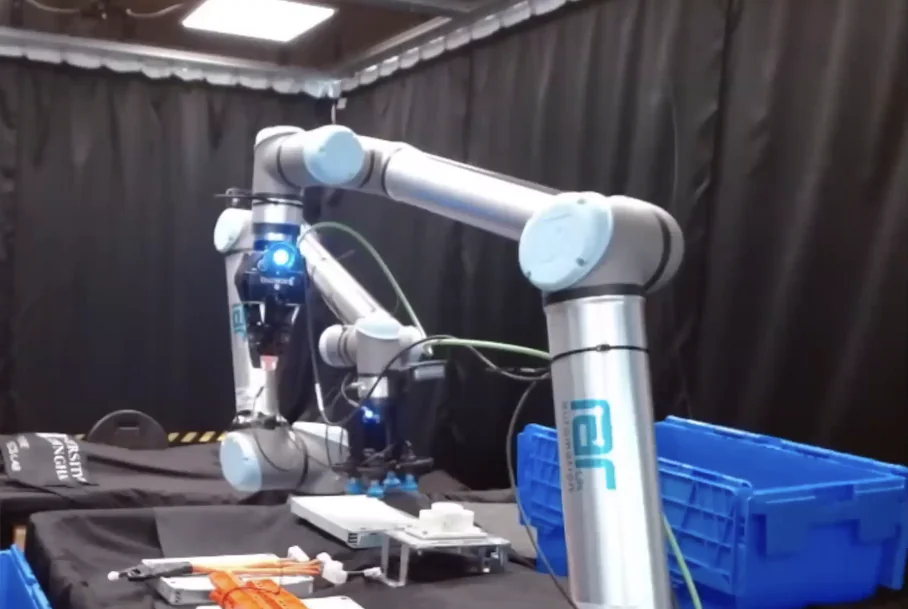
In our latest video interview, Dr. Alireza Rastegarpanah, Principal Investigator of REBELION‘s Robotics Work Package, presents the project’s Automated Dismantling System for Electric Vehicle Batteries. He explains how AI, computer vision and digital twin technology help robots adapt to each battery, and how a semi-autonomous tele-operation framework allows humans and robots to work safely together on complex tasks.

The system is now being scaled up and tested on industrial robots at the National Sustainable Robotic Centre, University of Birmingham, a key step towards real-world deployment. Dr. Rastegarpanah also explains why this matters beyond EV batteries: the same AI methods could help disassemble other complex products, such as electric modules and wind turbines, supporting the shift towards a circular economy.

> Click on the image to watch the full interview.
Curious about REBELION’s robotics research? Get in touch or explore the project further on our website.

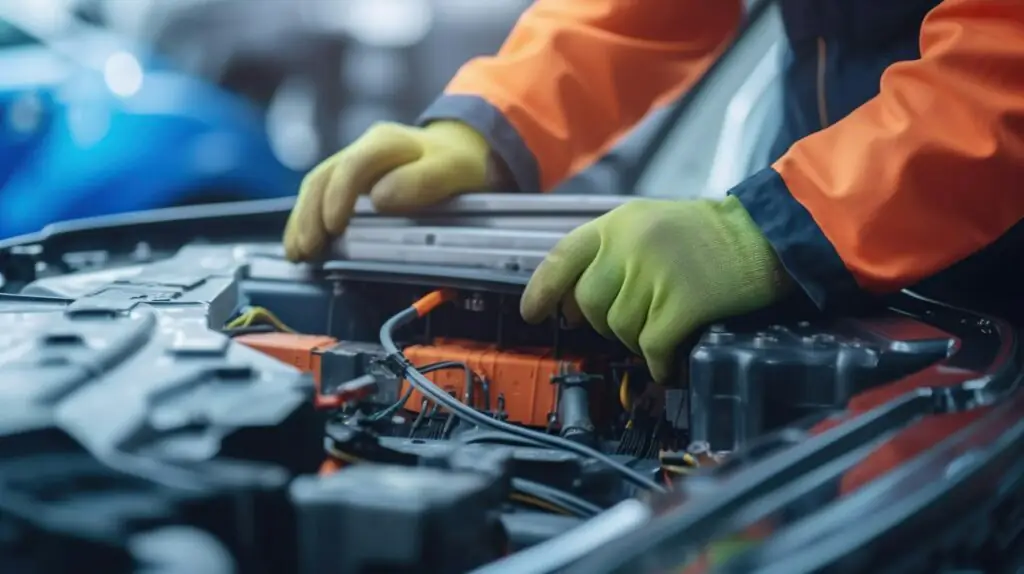
Featured image by Steve A Johnson on Pexels.

News
May 14, 2026

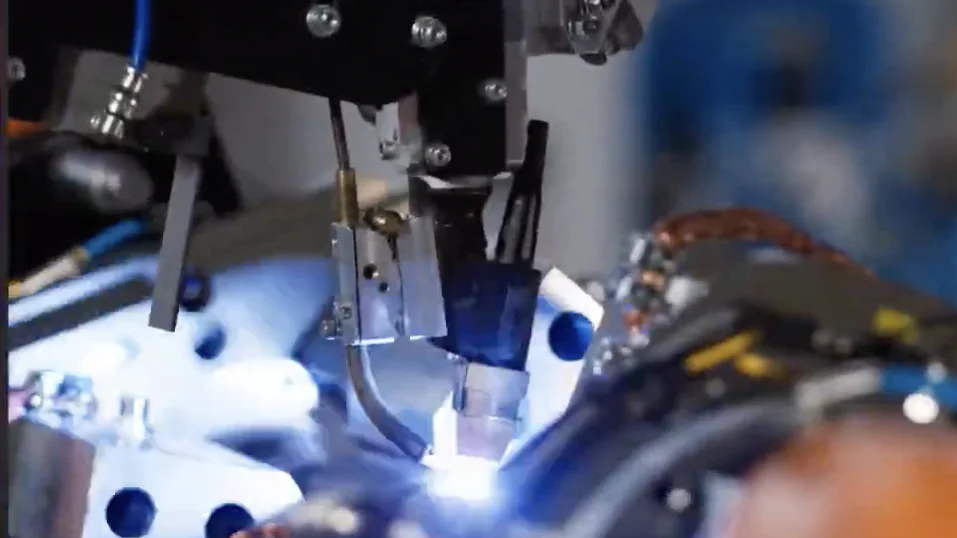
Automation, AI and scalability in EV battery disassembly

Some significant insights from the Circular Battery Cluster joint activities have now been featured in an article published by Manufacturing Tomorrow, the online trade magazine focused on Industry 4.0, advanced manufacturing and factory automation. The article builds on the exchange between researchers and experts from four Horizon Europe projects working on circular battery ecosystems and […]

Some significant insights from the Circular Battery Cluster joint activities have now been featured in an article published by Manufacturing Tomorrow, the online trade magazine focused on Industry 4.0, advanced manufacturing and factory automation.

The article builds on the exchange between researchers and experts from four Horizon Europe projects working on circular battery ecosystems and automated EV battery disassembly — REBELION, RECIRCULATE, REINFORCE and BATTEREVERSE.

The discussion explores why scaling battery disassembly is no longer simply a question of robotics or AI capabilities. The real challenge lies in the complexity of battery ecosystems: highly variable battery designs, limited standardisation, lack of accessible lifecycle data, and the need for adaptive and flexible disassembly workflows.

Representing REBELION, Professor Rustam Stolkin and Dr Alireza Rastegarpanah shared insights into the project’s work on adaptive robotics, AI-supported perception systems, digital twins and human-in-the-loop approaches for battery disassembly in highly variable environments.

Across the different contributions, three key messages clearly emerged:

  • the main bottleneck today is not automation itself, but battery variability and the absence of standardised disassembly approaches;
  • efficient battery recycling increasingly depends on data availability, including Digital Product Passports and AI-supported decision-making systems;
  • the future of battery disassembly will likely rely on flexible human-robot collaboration and adaptive systems rather than fully rigid automated production lines.

Overall, the discussion highlighted how the transition towards a truly circular battery economy will require stronger integration between robotics, AI, data infrastructures, recycling processes and product design.

Read the full article.

Cover image by Michael Markof on pexels.

News
Mar 31, 2026

Watch the full REBELION webinar on AI and robotics for battery inspection and recycling

On 18 March, REBELION co-hosted a well-attended webinar with Recirculate as part of the Circular Battery Cluster, focusing on the role of AI and robotics in battery inspection, disassembly, and recycling. The session, titled “Automated vs Manual: How Robotics Are Transforming Battery Inspection”, explored how AI-driven automation and robotics are enabling safer, faster, and more […]

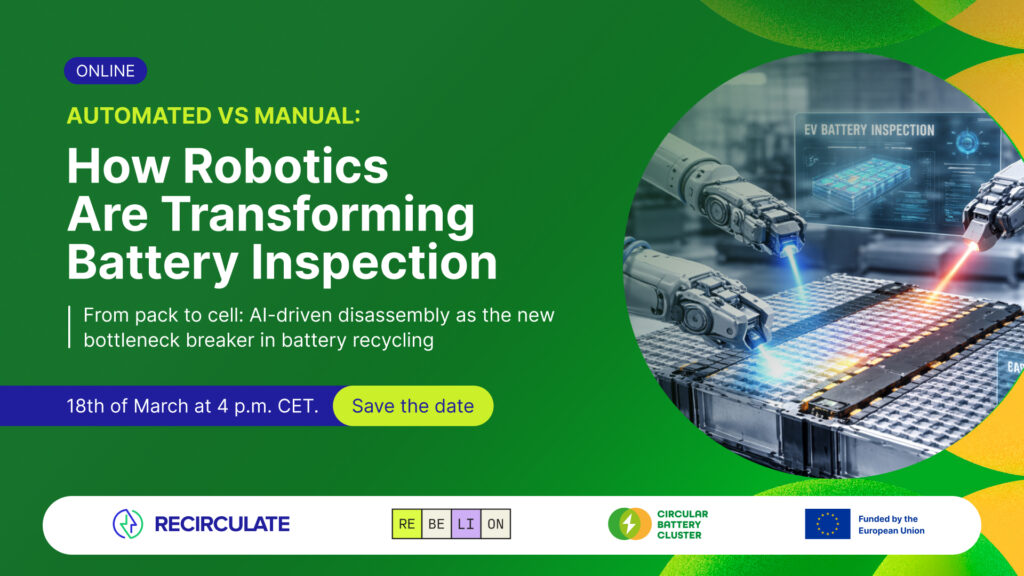
On 18 March, REBELION co-hosted a well-attended webinar with Recirculate as part of the Circular Battery Cluster, focusing on the role of AI and robotics in battery inspection, disassembly, and recycling.

The session, titled “Automated vs Manual: How Robotics Are Transforming Battery Inspection”, explored how AI-driven automation and robotics are enabling safer, faster, and more scalable solutions compared to traditional manual processes. Speakers shared insights on current industry practices, technological advancements, and persistent challenges, including data availability, standardisation, and the diversity of battery designs.

Discussions covered a range of topics, from AI- and robotics-enabled disassembly (from pack to cell level) to machine learning approaches for component identification, as well as automated inspection systems supporting condition assessment and informed decisions on reuse or recycling. The role of automation in improving integration between inspection and disassembly processes was also highlighted as a key enabler for a more efficient and scalable circular battery ecosystem.

> Click on the image to watch the full webinar recording.

This event is part of the Circular Battery Cluster series, promoting collaboration and knowledge exchange across EU-funded projects.

Follow REBELION and the Circular Battery Cluster for more updates on battery recycling, circularity, and innovation.

Events
Mar 18, 2026
Webinar

AI and Robotics Transforming Battery Inspection and Recycling

Battery inspection and disassembly are emerging as key bottlenecks in the circular battery value chain. While manual processes remain slow, costly, and potentially risky, AI‑driven automation and robotics are enabling safer, faster, and more scalable solutions. A dedicated webinar, co-hosted by REBELION and Recirculate within the Circular Battery Cluster, will take place on 18 March at […]

Battery inspection and disassembly are emerging as key bottlenecks in the circular battery value chain. While manual processes remain slow, costly, and potentially risky, AI‑driven automation and robotics are enabling safer, faster, and more scalable solutions.

A dedicated webinar, co-hosted by REBELION and Recirculate within the Circular Battery Cluster, will take place on 18 March at 16:00 CET to examine how AI and robotics are reshaping battery inspection, reuse, and recycling in industrial settings.

The session will compare manual and automated approaches, examining industry practices, technological advancements, and ongoing challenges such as data availability, standardisation, and diverse battery designs. Topics include AI‑ and robotics‑enabled disassembly from pack to cell level, machine learning for component identification, and automated inspection systems that support condition assessment and strategic reuse or recycling — even without QR codes or Digital Product Passports.

The webinar will also address how automated inspection can strengthen decision‑making and improve integration between inspection and disassembly systems, contributing to a more efficient and scalable circular battery ecosystem.

Join the webinar
Automated vs Manual: How Robotics Are Transforming Battery Inspection
18 March – 16:00 CET

Speakers

Tomi Pitkäaho – PhD, Principal Lecturer in Research, Centria University of Applied Sciences
Rustam Stolkin – Professor, Chair of Robotics, University of Birmingham, Founder and Director of the Extreme Robotics Lab
Alireza Rastegarpanah – Visiting Professor, Lecturer, Aston University School of Computer Science and Digital Technologies
Giampiero Pupillo – Automation Engineer, Comau
Óscar Palacín Domínguez – Researcher, R+D+i Project Manager, Eurecat – Technology Centre

This is the second event in the Circular Battery Cluster series, fostering knowledge exchange across research, industry, and innovation.

News
Feb 9, 2026

REBELION moves into its final year after Birmingham Review Meeting

On 3–4 February, the REBELION consortium gathered in Birmingham, UK, for its second Review Meeting, hosted by The Extreme Robotics Lab at the University of Birmingham, a partner of the project. During the two-day meeting, partners reviewed the progress achieved so far and confirmed that REBELION is advancing according to plan. As REBELION enters its […]

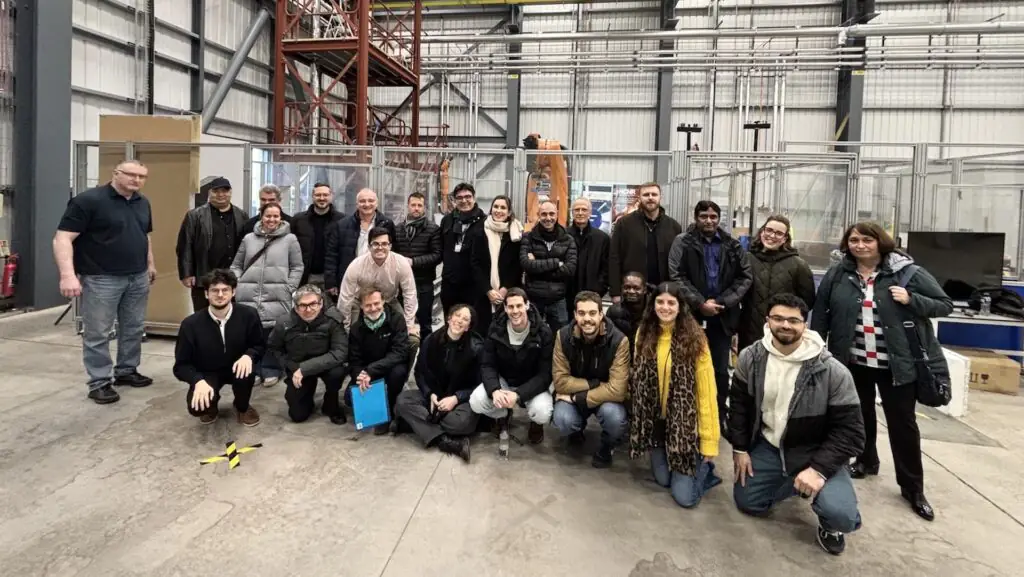
On 3–4 February, the REBELION consortium gathered in Birmingham, UK, for its second Review Meeting, hosted by The Extreme Robotics Lab at the University of Birmingham, a partner of the project.

During the two-day meeting, partners reviewed the progress achieved so far and confirmed that REBELION is advancing according to plan. As REBELION enters its final year, set to conclude at the end of December 2026, discussions focused on consolidating results and preparing for the next steps.

Taking advantage of the visit, consortium members also toured the Sustainable Robotics Centre at the Birmingham Energy Innovation Centre (Tyseley Technology Park), gaining further insight into cutting-edge research infrastructures in the field.

About REBELION

REBELION is an EU-funded project tackling the waste management challenges of lithium-ion batteries used in electric mobility. By developing advanced recycling solutions, the project aims to recover and valorise critical raw materials, strengthening Europe’s strategic autonomy and supporting a more sustainable and competitive battery value chain.


Events
Jun 4, 2025
School of Metallurgy and Materials (GA03), University of Birmingham
Birmingham

Seminar on Intelligent Systems and Immersive Technologies in Action

The REBELION project, in collaboration with the University of Birmingham, Aston University, the University of Brescia, and Birmingham City University, is excited to support the “Seminar on Intelligent Systems and Immersive Technologies in Action” on Tuesday, 4th June 2025, from 10:00 AM to 12:00 PM at the School of Metallurgy and Materials (GA03), University of […]

The REBELION project, in collaboration with the University of Birmingham, Aston University, the University of Brescia, and Birmingham City University, is excited to support the “Seminar on Intelligent Systems and Immersive Technologies in Action” on Tuesday, 4th June 2025, from 10:00 AM to 12:00 PM at the School of Metallurgy and Materials (GA03), University of Birmingham.

Speakers of the Seminar

The seminar will feature insightful talks from leading experts in the field of robotics, artificial intelligence, and immersive technologies, including:

  • Prof. Alberto Borboni (University of Brescia) – A pioneer in intelligent robotics with a focus on bridging the gap between advanced mechatronic systems and real-world applications in manufacturing and healthcare.
  • Prof. Rustam Stolkin (University of Birmingham) – An internationally recognized leader in autonomous systems for safety-critical industries, specializing in advanced robotics for high-consequence environments.
  • Prof. Massimiliano Di Luca (University of Birmingham) – An expert in multisensory perception and human-computer interaction, known for his work on enhancing human performance through immersive virtual and augmented reality technologies.

Join the Seminar

This event will be a unique opportunity to explore latest research, network with industry leaders, and discover the advancements in robotics, AI, and immersive technologies.

Join the seminar to connect with fellow researchers, industry professionals, and innovators driving the future of intelligent systems and immersive experiences.