
Long after they stop powering cars, lithium-ion batteries still have years of useful life ahead of them. From designer lamps to solar-powered rickshaws, innovative second-life applications are proving their enormous potential. But before repurposing can become the norm, Europe must solve a far less glamorous challenge: deciding who is responsible when something goes wrong.
By Cornelia Trefflich
When e-scooters power designer lamps
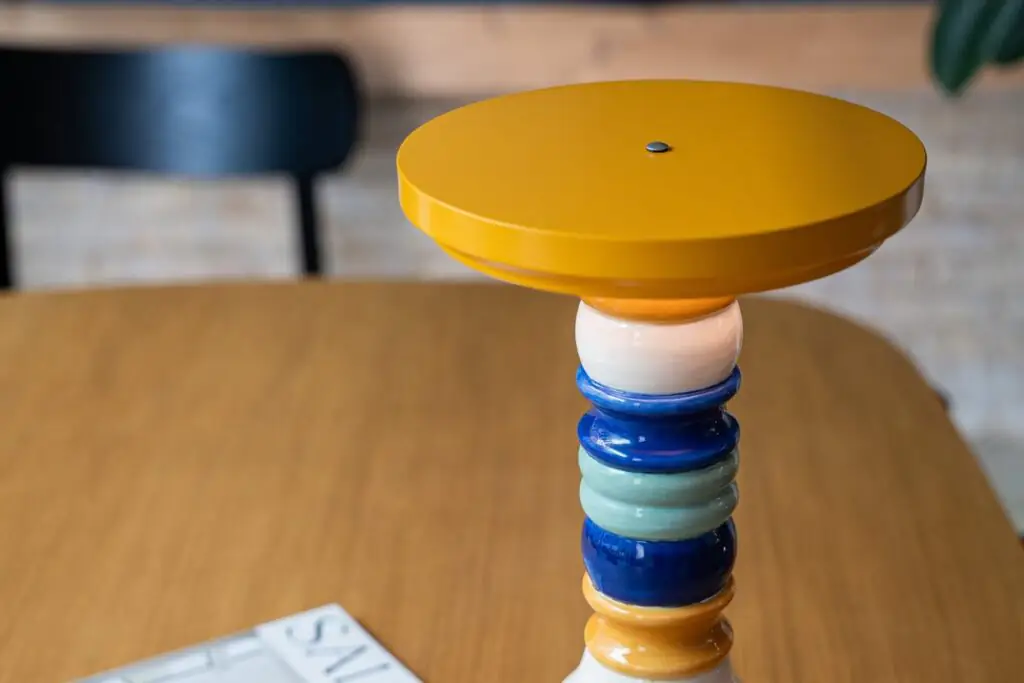
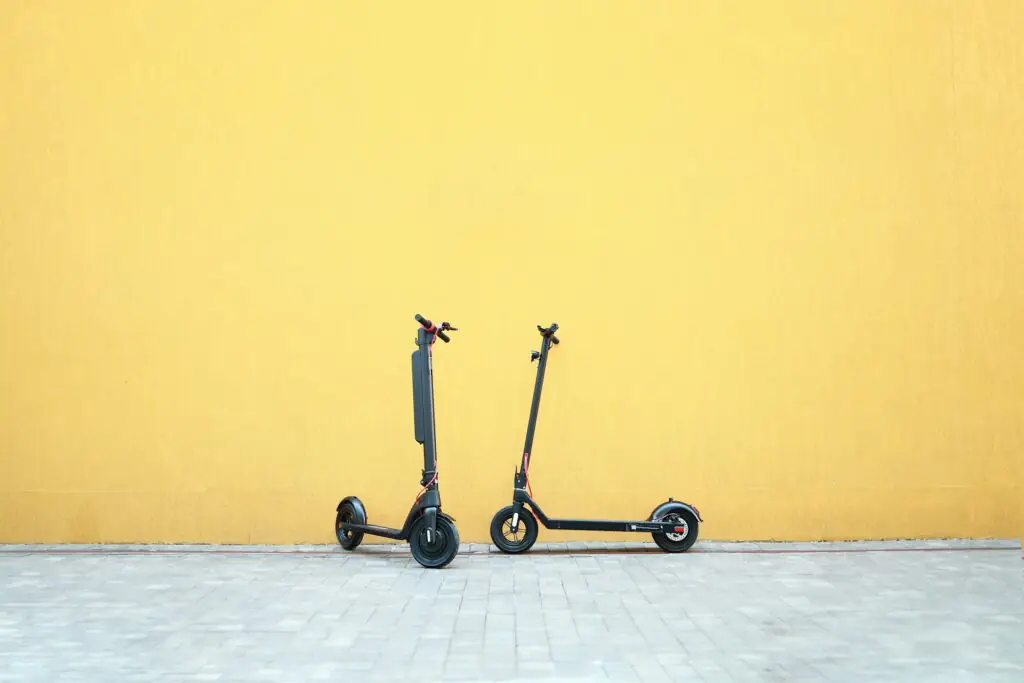
At first glance, the KLAAP lamp looks like a minimalist design object: a simple aluminium tube and a tiltable square cover that, when opened, releases a soft, indirect light, rechargeable via USB whenever needed. Yet it holds something special inside; its technological heart is a second-life battery salvaged from an e-scooter.
Although the battery has grown too weak over time to drive an e-scooter, it still delivers a completely stable, long-lasting supply for a table lamp, as explains Juan Costa, CEO of ONA, the company that created the prototype of the lamp.
“Even if these batteries are discarded because they can no longer meet the demanding requirements of their original application, they still retain a significant percentage of charge. With so much capacity left, they have a long secondary lifespan in other fields, such as our own lighting sector.”
The Valencia-based company is a lighting design publisher specialising in illumination and exclusive objects, and it has been involved in EU-funded circular-economy projects for years.
“At the beginning, the goal was to integrate a solar panel that would define the form of the object and its inclination. However, developing a solar version within the timeframe and resources of the project became very challenging. We also realised that integrating the solar technology would have affected the lightness of the design, as the thin plate would have needed to become much thicker. That’s when the idea of reusing electric batteries was proposed as a way to keep the original intention of design while giving these batteries a second life,” recalls Paola Bergier of PAAK, which won the competition for designing the lamp.
For PAAK, it was a matter of conviction that good design shouldn’t stop at form: Their lamp is built for circularity and can be taken apart in just a few steps, making repair and recycling far easier, as Costa elaborates: “Effective recycling relies on quick, contamination-free disassembly – a major industry challenge that the KLAAP light fixture directly solves. By removing just five screws, three at the base and two inside, the entire fixture completely separates into its core materials. This smart design minimises disassembly time, lowers recycling costs and ensures maximum material recovery.”

- KLAAP Lamp by ONA in three different colours

- KLAAP Lamp by ONA
- Bubble lamp by ONA
Second-life batteries in rural India and beyond: power to the people
The KLAAP lamp is no isolated case. Around the world, everyday objects are giving batteries a second life. Cells that no longer hold enough energy for their original purpose are not thrown away – they are put to work elsewhere.
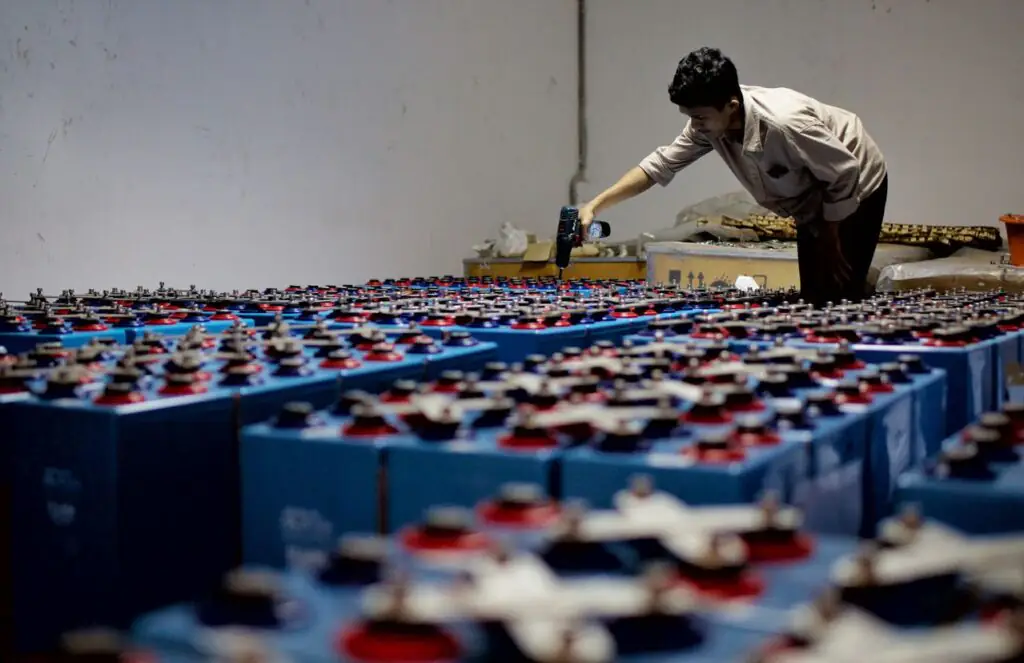
One example can be found in a rural region of southern India, where electric rickshaws carry women and their goods to the market. These three-wheelers are charged at solar-powered stations in which retired Audi e-tron batteries serve as energy storage. Behind the initiative is Nunam, a German-Indian startup working with the Audi Environmental Foundation to give retired batteries from an Audi e-tron test fleet a second life. The original idea, however, came earlier – from an observation Nunam co-founder Prodip Chatterjee made in Indian villages:
“If you don’t have a power supply and you need electricity, the only option […] is a small solar system with a storage unit. And it was clear that the storage unit is one of the parameters that is very expensive and also not particularly efficient.”
The second-life element sits in the charging stations. During the day, while the rickshaws are out on the road, the stations store solar power from the roof of the local project partner; in the evening, when the vehicles return, they recharge on that sustainably generated electricity.
For the women, the project translates above all into independence. Where they once had to rely on middlemen, they can now bring their goods to market themselves. The effect has spread, as Chatterjee adds: “We started with four women, and now ten more have got their driver’s licences […] because they saw the others and now they want to get a vehicle for themselves too.”
While in rural India second-life batteries help power electric rickshaws and expand access to clean transport, they are also finding their way into everyday consumer products. The KLAAP lamp is just one example of how they can be repurposed into objects such as designer lighting or Bluetooth speakers. British company Gomi takes the idea further, turning discarded e-bike batteries into speakers made from non-recyclable plastics, delivering around 32 hours of playback on a single charge.
Who is liable if my lamp catches fire?
Examples like these show that second-life batteries can work in everyday life. Why their use remains the exception rather than the rule is exactly what the EU-funded REBELION project – the very project under which the KLAAP lamp was created – sets out to change. This European initiative aims to develop cutting-edge technologies that make a circular model for electric-mobility lithium-ion batteries possible, while making repurposing economically viable.
“All the goals come together to the same general goal, that is to make this combination of recycling, repurposing […] profitable. Which is not the case at the moment,” explains Guillermo Sánchez Plaza, REBELION project coordinator at the Universitat Politècnica de València.
Three hurdles have blocked wider adoption so far: certification, liability, and economic viability. Just how decisive certification and standardisation are becomes clear with the KLAAP lamp. To be sold, it must be certified, and for that, its prototype maker, ONA, needs valid documentation for the battery cells inside. But the original cell maker, Samsung, will not provide it, because the cells have been dismantled and repurposed.
Sánchez Plaza describes the problem: “We have to certify these lamps. […] The battery provider, which is Samsung, would have to provide those certificates. […] It is not clear that they want to, because you have manipulated the cells. This is the bottleneck we are facing right now. And it’s a huge one.”
Then there’s liability. Who is to blame if a battery built for a different purpose fails? “What about if that lamp in that house burns? […] I find out it was the cell from the original manufacturer […] and he says ‘oh, forget about it. It’s not my responsibility, it’s not its primary use,'” Sánchez Plaza sums up.
On top of that, every reused module carries its own history, so the condition of each battery, unlike new stock, is unique, as Nunam co-founder Chatterjee confirms from experience: “[…] if you get 50 used vehicle battery packs, those 50 have all been driven differently […] which means there is massive heterogeneity in terms of what the battery’s first life was like.”
This lack of uniformity is what drives up costs and undermines economic viability. Since every cell currently has to be inspected individually and processed by hand, the effort is enormous. For Sánchez Plaza, the key therefore lies in standardisation: “[…] the cells are all the same, all equal, same format, so you can really automate. This industry is about automation, and you can automate to the extent that the cells have standard format.”
Because most standards date from a time when repurposing and recycling barely mattered, the market stays blocked. REBELION targets exactly this bottleneck, developing the tools to open the way for everyday reuse.
Dismantling, diagnosing, reusing: the toolkit that gives batteries a new life
Behind it all lies a clear philosophy: recycling is right and good – but only after a battery has lived its second life. A car battery deemed “spent” and ready for replacement still holds 70 to 80 percent of its original capacity. Shredding it straight away would waste enormous untapped potential; for less demanding uses, it has years of energy left, as REBELION’s technical coordinator, Jaime Alcalá Sanz, points out:
“The value of the battery is more than the value of the materials combined […] it has a design, it has a purpose, and it’s still profitable for five, ten years extra.”
The credo, then: use, repurpose, and only then recycle. To make that work, Alcalá Sanz and his colleagues are building a diagnostic procedure that determines each cell’s “state of health” and sorts it into categories, an automated system for dismantling and testing used packs, and a blockchain-based digital battery passport that traces the full history of every battery. Only this traceability lays the groundwork for deciding who might be held liable if something goes wrong, even if the rules for that still have to be written, as Alcalá Sanz confirms:
“The question that’s hard to answer is who takes responsibility if something goes wrong and regulation is not clear. In the project we have the digital battery passport […] there will be traceability of everything that has happened to the battery […] this will be a way to assign responsibility. […] But the regulation will come after the technology is fully developed.”
The effort could pay off for Europe. According to the European Commission, the EU depends heavily on imports of critical raw materials, while in 2025 more than one in four cars sold in Europe was electric. The number of batteries that will soon have served their purpose is therefore rising fast, and repurposing them before recycling would make the continent less dependent on costly imports:
“The quality of the recycling delivers higher purity materials and […] maximises the value of these raw materials for Europe – recycling is our mining, this is what is always said,” Alcalá Sanz points out.
For that vision to become reality, legislation has to keep pace with the technology, something Chatterjee is convinced of as well: “Everything must be done to ensure regulatory clarity […] and that the regulations are based on technical realities.” Once the legal framework is in place, a smart idea like the KLAAP lamp can become a standard that lights up our daily lives as a matter of course.
Featured image by Yiting He on Unsplash.